
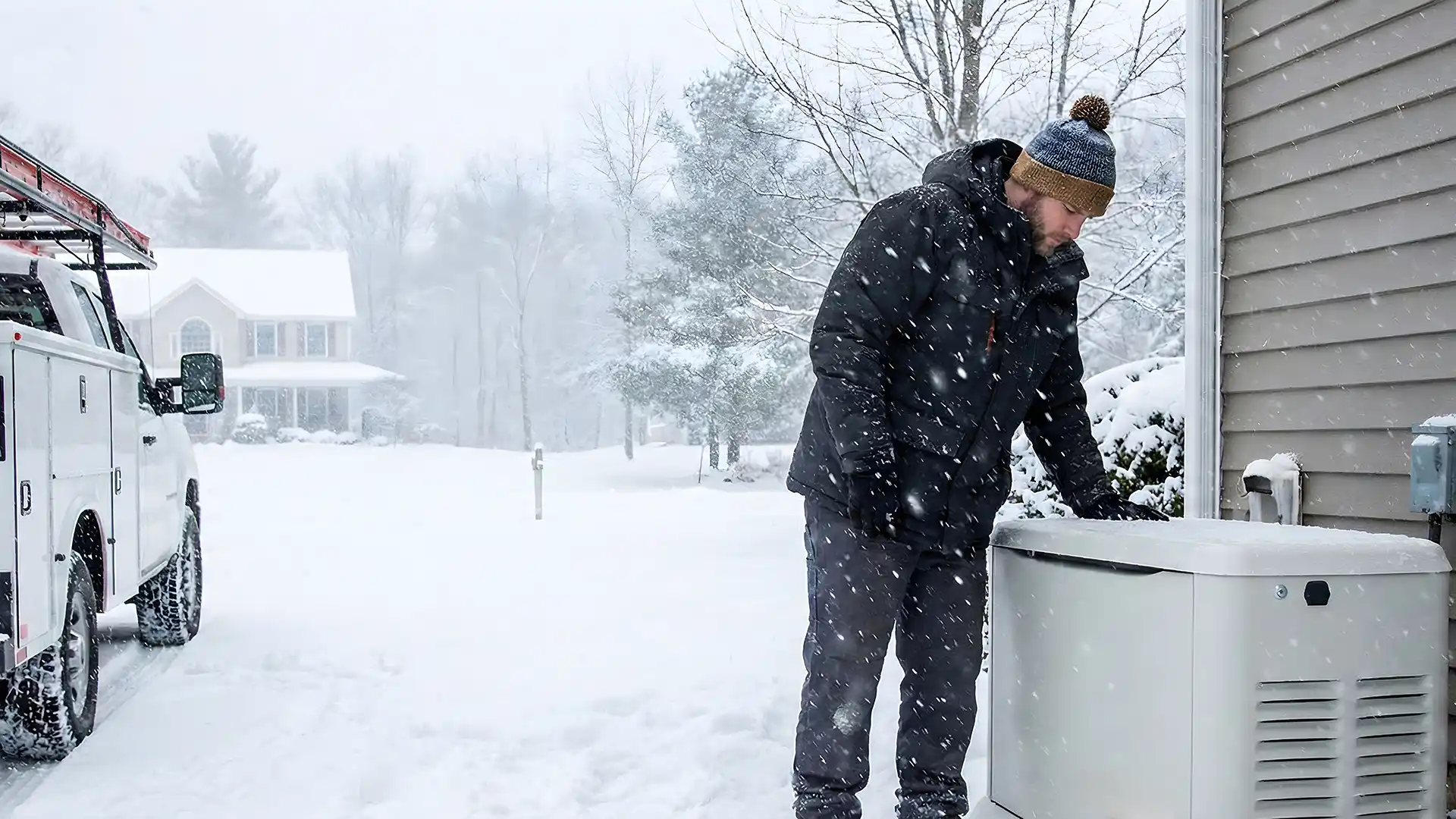
A whole home standby generator is designed to be a reliable, automatic backup power system that protects your home during outages. While these systems are built for durability and long-term use, they still require routine maintenance to ensure they perform correctly when you need them most. The amount of maintenance required is generally low compared to other major home systems, but it is consistent and important.
Understanding what maintenance is required, how often it should be performed, and why it matters can help homeowners avoid unexpected failures and extend the life of their generator.
Why Generator Maintenance Matters
A standby generator may sit unused for long periods of time, sometimes only running during brief weekly test cycles or during actual power outages. Because it is not operating continuously, small issues can develop without being obvious.
Maintenance ensures that critical components such as the battery, fuel system, engine oil, filters, and electrical connections remain in good working condition. Without regular service, a generator may fail to start during an outage or shut down unexpectedly under load.
In short, maintenance is what keeps a standby generator dependable instead of just installed.
Typical Maintenance Schedule
Most residential standby generators require at least one professional maintenance visit per year. This annual service is the baseline recommended by most manufacturers such as Generac and Kohler.
However, depending on usage and environmental conditions, some systems may benefit from more frequent checks. For example, generators in areas with heavy pollen, humidity, salt exposure, or frequent outages may require closer attention.
A standard maintenance schedule usually includes:
- Annual professional inspection and tune-up
- Weekly or monthly self-test cycles
- Oil and filter changes based on run hours
- Battery inspection and replacement every 2 to 3 years
The exact schedule can vary slightly depending on the model and usage, but the annual service is the most important requirement.
What Happens During Generator Maintenance
A professional maintenance visit typically involves a full system inspection and performance check. This includes both mechanical and electrical components.
Common maintenance tasks include:
Oil and filter changes
Just like a car engine, a generator engine relies on clean oil to operate smoothly. Over time, oil breaks down and must be replaced along with the oil filter.
Battery testing
The battery is responsible for starting the generator. If it is weak or failing, the generator may not start during an outage. Technicians test voltage and replace the battery if needed.
Air and fuel system inspection
Air filters and fuel systems are checked for debris, blockages, or wear that could affect performance.
Spark plug replacement
Spark plugs are inspected and replaced if worn to ensure reliable ignition.
Transfer switch testing
The automatic transfer switch is tested to confirm it properly switches between utility power and generator power.
Full operational test
The generator is started and run under load to verify it can handle real-world electrical demand.
How Often Should You Check Your Generator Yourself?
Between professional services, homeowners should still be aware of their generator’s status. Most modern standby generators perform automatic self-tests weekly.
During these self-tests, the system briefly starts and runs without powering the home. This helps confirm that the engine and electrical systems are functioning properly.
Homeowners should occasionally check for:
- Warning lights or error codes
- Unusual noises or vibrations
- Fuel supply status (propane tank levels if applicable)
- Clear airflow around the unit
These simple checks can help catch issues early before they become serious problems.
What Happens If You Skip Maintenance?
Skipping maintenance can lead to several problems, including:
- Generator failure to start during an outage
- Reduced engine life due to worn components
- Battery failure at critical times
- Fuel system clogging or inefficiency
- Unexpected shutdowns under load
One of the most common issues seen in neglected generators is battery failure, since the battery is constantly required for startup but often overlooked.
In many cases, lack of maintenance is the reason a generator fails exactly when it is needed most.
Final Thoughts
A standby generator does not require constant attention, but it does require consistent, scheduled maintenance to stay reliable. For most homeowners, this means a single professional service visit per year, along with basic awareness of system status between visits.
When properly maintained, a standby generator can provide decades of dependable service, giving homeowners peace of mind during storms, outages, and unexpected utility failures.