
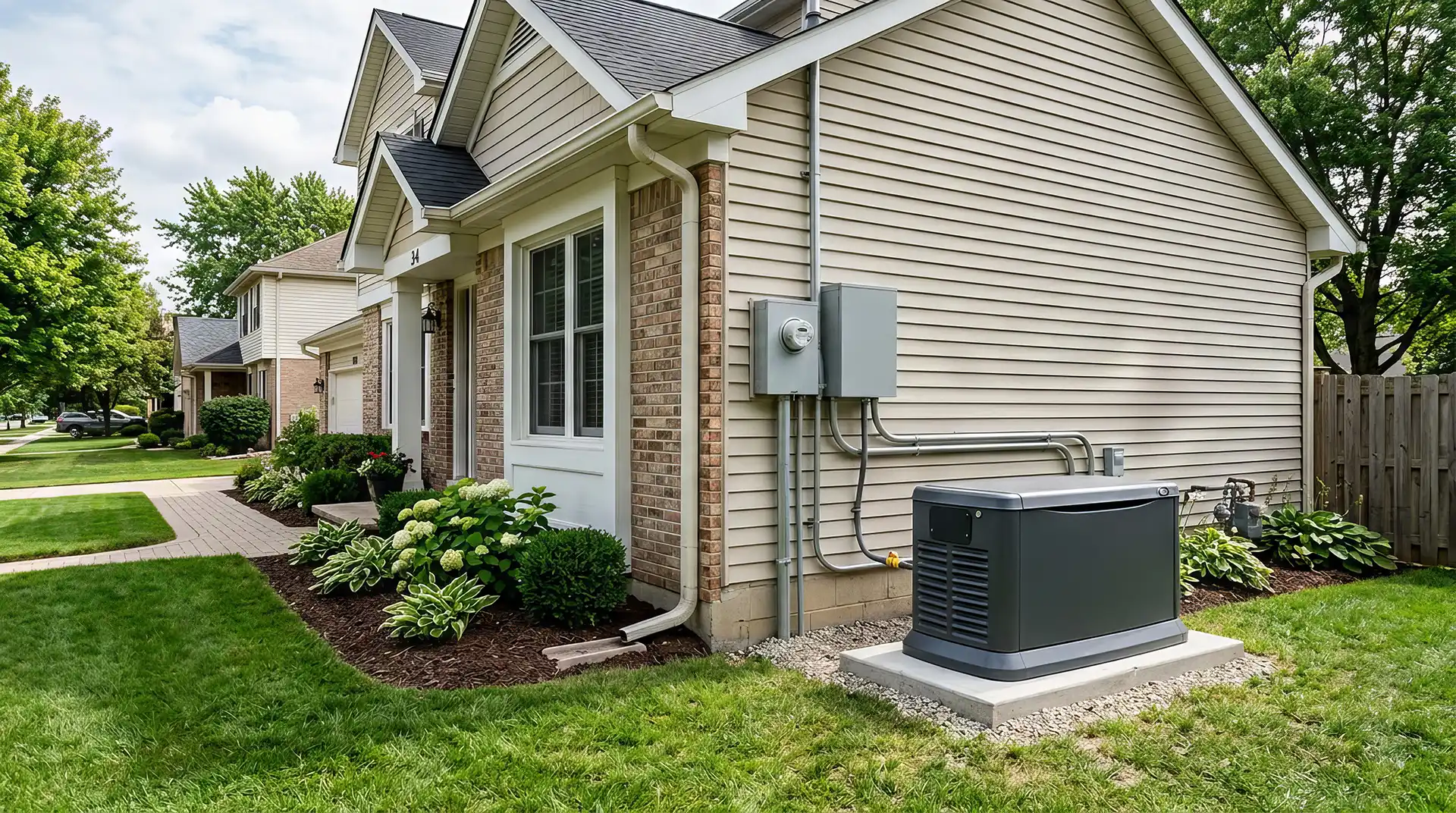
A whole home standby generator is one of the most reliable ways to keep your home powered during an outage. While the concept is simple, the system behind it is a carefully engineered combination of electrical controls, sensors, and an automatic fuel-powered engine designed to activate within seconds when utility power is lost.
For homeowners in areas like Upstate South Carolina where thunderstorms, wind events, and occasional utility disruptions are common, understanding how these systems work can make it easier to see why they are such a valuable long-term investment.
Continuous Monitoring of Utility Power
A standby generator is always in “ready” mode. It is not running all the time, but it is constantly monitoring the electrical supply coming from the utility grid.
This monitoring is handled by a component called the automatic transfer switch. The transfer switch is connected between your home’s main electrical panel and the utility power line. It acts as the brain of the system, watching for any interruption or drop in voltage.
When everything is normal, electricity flows from the utility company into your home just like it always does. The generator remains idle but ready.
Detecting a Power Outage
The moment a power outage occurs, the transfer switch detects the loss of voltage. This happens instantly. It does not require manual input or confirmation from the homeowner.
Once the system confirms that utility power is no longer stable, it sends a signal to the generator to start. This is where the standby generator begins its automatic response process.
Automatic Startup Sequence
After receiving the start signal, the generator’s engine begins its startup sequence. This is similar to starting a car, but fully automated and controlled by the system’s internal electronics.
The generator runs a self-check to make sure all systems are ready, then begins to crank the engine. Once the engine reaches the correct operating speed, it stabilizes and prepares to take on electrical load.
This entire process typically happens within seconds. Most standby generators are designed to restore power to a home in less than a minute after an outage is detected.
Transfer of Electrical Load
Once the generator is running and producing stable power, the automatic transfer switch disconnects the home from the utility grid. This is a critical safety step that prevents electricity from feeding back into the utility lines, which could be dangerous for repair crews working on downed lines.
After disconnecting from the grid, the transfer switch connects your home’s electrical system to the generator instead.
At this point, your home begins receiving power from the generator rather than the utility company.
Depending on the size of the generator and how your system is configured, it may power your entire home or only selected circuits such as HVAC systems, refrigerators, lighting, and essential outlets.
Power Management During Operation
Once your home is running on generator power, the system continues to manage electrical demand. Larger appliances such as air conditioners, well pumps, and electric water heaters require significant power to operate. To handle this efficiently, some systems use load management modules.
These modules prioritize which appliances run at any given time to prevent overloading the generator. For example, the system may temporarily cycle the air conditioner off while the water heater runs, then switch back once demand decreases.
This intelligent power distribution helps the generator operate efficiently without being overloaded.
Fuel Supply and Continuous Operation
Standby generators run on either natural gas or propane. These fuel sources are critical to how long the generator can operate.
If your home uses natural gas, the generator is connected directly to the utility gas line. This allows for continuous operation during long outages as long as the gas supply remains active.
If your home uses propane, the generator pulls fuel from an on-site storage tank. The runtime depends on the size of the tank and the amount of electrical load being supported.
In both cases, the generator is designed to operate for extended periods as long as fuel is available and the system is properly maintained.
Returning to Utility Power
When utility power is restored, the standby generator does not switch back immediately. Instead, it waits for stable voltage to ensure the grid is fully reliable again.
Once the system confirms that utility power has returned and stabilized, the transfer switch disconnects the generator and reconnects the home to the grid.
The generator then runs a brief cool-down cycle before shutting itself off and returning to standby mode. It remains ready to activate again if another outage occurs.
Routine Self-Testing
To ensure reliability, most standby generators perform automatic self-tests on a regular schedule, often weekly. During this test, the generator starts briefly and runs without powering the home.
This process ensures the engine, battery, and electrical components are functioning properly and helps identify potential issues before an actual outage occurs.
If a problem is detected during a self-test, the system will typically generate an alert so it can be serviced before it is needed in an emergency situation.
Why This System Matters
The real value of a whole home standby generator is not just in how it works, but in what it prevents. Power outages can lead to spoiled food, loss of heating or cooling, interrupted work, security risks, and inconvenience during severe weather.
Because the system operates automatically, homeowners do not need to be present or take any action. It provides seamless protection in the background, ensuring that life at home continues with minimal disruption.
Final Thoughts
A whole home standby generator is a combination of intelligent controls, automatic switching technology, and a fuel-powered engine designed to respond instantly when the grid fails. From constant monitoring to automatic startup, load transfer, and self-testing, every part of the system is built for reliability and convenience.
For homeowners in storm-prone regions or areas with unreliable power, understanding how these systems work highlights why they have become one of the most trusted solutions for home energy security.